DRAWING ROOM BIENNIALS
Fundraising exhibition: Selected artists are invited to donate one A4 drawing on paper, using any method or medium, with the resulting works exhibited at the gallery for three months before being auctioned online. Details here
Morris’s participation 2009 – ongoing.
2026
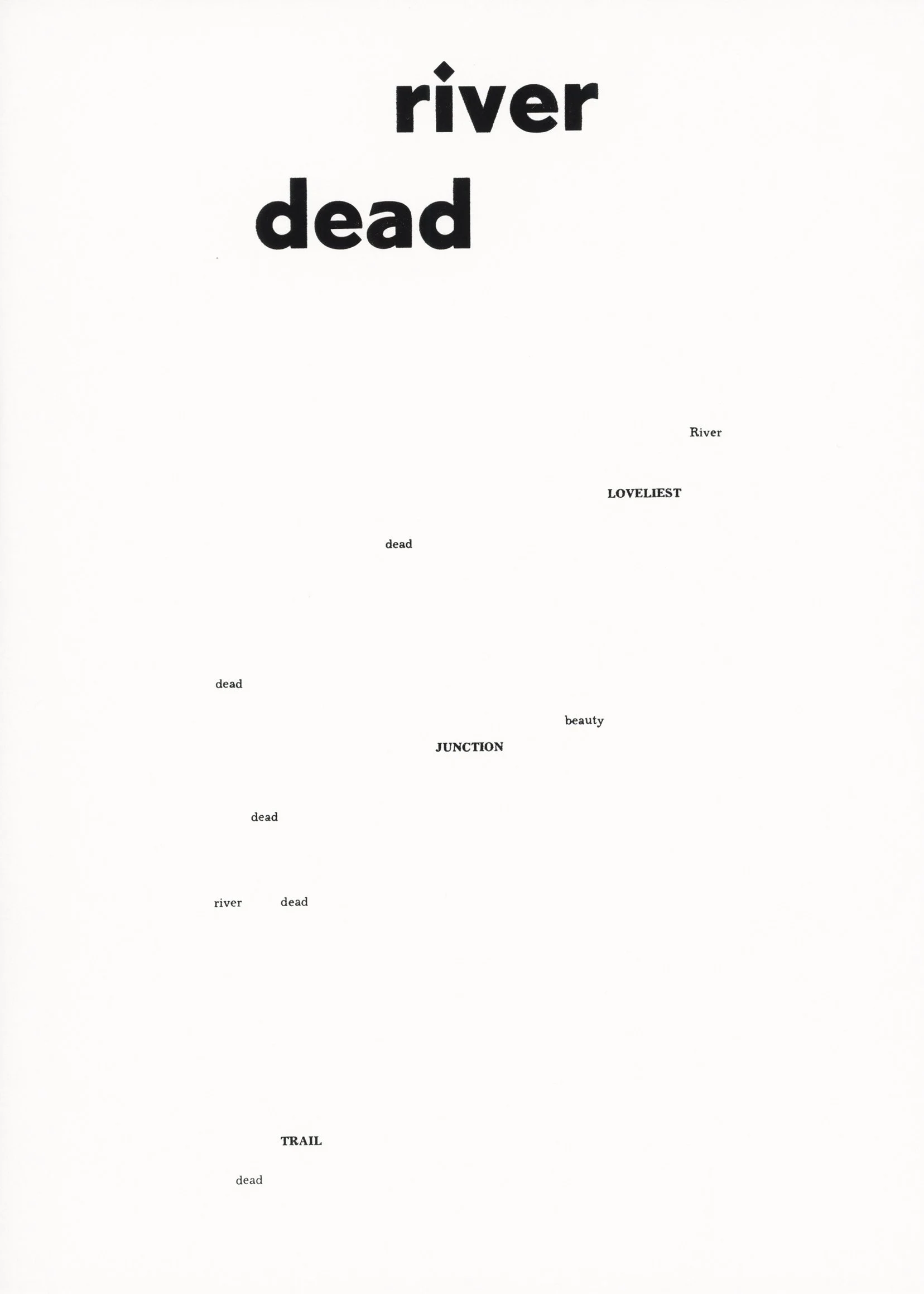
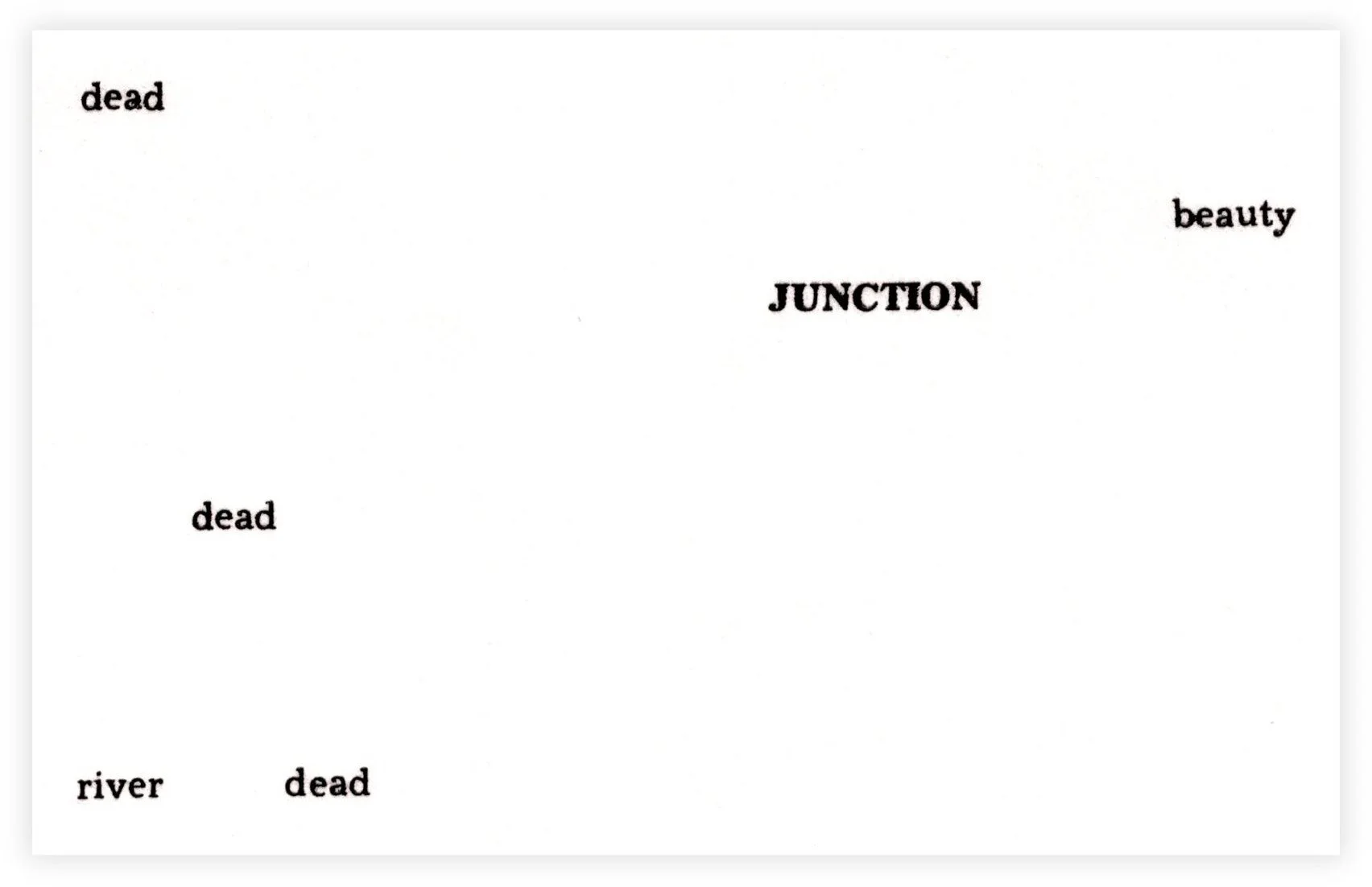
ABOUT: This poem was extracted from a newspaper report titled ‘THE RIVER OF DEAD FISH’, printed in the Milngavie and Bearsden Herald on July 23rd, 1971. The font and the poem’s layout exactly replicate that of the report. It is one of a set of poems that have been similarly extracted from the numerous articles on The British Newspaper Archive that were returned when I typed into its search engine ‘The Beautiful River is Dead’. The work began when I read a 2022 report about the ‘beautiful’ River Lim in Lyme Regis, Dorset, that had been declared ‘ecologically dead’. As a child, I spent many happy holidays in Lyme Regis. I couldn’t understand why the entire town wasn’t marching on Parliament. Instead, a small group of volunteers managed to prove that South West Water had illegally discharged vast quantities of untreated sewage into the river. It’s a familiar story.
Catalogue with essays by Emily Labarge, Chloë Ashby, Kadish Morris, Cleo Roberts-Komireddi
2024


ABOUT: The Map and the Territory, 2023, adopts Robert Rauschenberg’s method of ‘transfer drawing’ – a technique that enabled him to take images from print media and transfer them directly onto paper or canvas, creating new combinations that suggest alternative political histories. Morris’s choice of image is a fragment of a photograph of a whiteboard that surfaced in the British press in May 2021. The diagram on the whiteboard documented the UK government’s plans for keeping the country safe during the then-ongoing global pandemic. The original image was not intended to be seen by members of the public.
Mornings…,2024, is a typing. Through the use of carbon copy paper, the writing has been transferred from one surface to another with the original or top copy discarded. This displacement is typical of the operation at play in many of Morris’s works, where one absent thing, rule or action is used to generate another which nevertheless retains an echo of the original missing thing. The poem references many well-known verb lists such as those by Richard Serra, Bernadette Mayer and Etel Adnan – the latter most importantly when using this form to express helplessness in the face of political unrest, including war and genocide.
EXTRACT:For her diagrammatic drawings, Susan Morris picks at and plunders a variety of sources including overheard conversations, information gathered from the news and recordings of ambient sound. Her transfer drawing, The Map and the Territory, derives from a photograph published in the UK press of a whiteboard documenting a government planning session for dealing with the COVID-19 pandemic. Rather than reproducing the image in full, however, Morris edits this chanced-upon image, taking a section that foregrounds the sentence: ‘Who do we not save?’.
2019
YES (Screenshot), Pencil on paper, 29.7 x 21 cm, 2019
2017
Untitled Diptych, Archival inkjet on Hahnemuhle paper (left); Pen and ink plotter drawing made by handbuilt robot (right), Diptych, 29 x 21 cm each, 2017
2015
Sundial Nightwatch - Drawing for Tapestry, Inkjet plotter on archive Hahnemuehle paper, 21 x 31.9 cm, 2015
Related work: Self Moderation
2013
A record of the events of January 24th 2012, 3-Dimensional print of data drawn from the body, compressed powder and glue, 21 x 25 x 5.5cm, 2013
2011
Unititled Motion Capture Drawing /Left Hand /One Hour, August 2009, archival ink jet print, 21 x 29.7 cm, 2011
Related work: Untitled Motion Capture Drawings (LGW)
2009
Mathew Hale and Susan Morris, Unser Komma, Typing on paper, cloth mounted, 29.6 cm x 42.4cm, 2009